Sunday funnies: Rodney Dangerfield was a jerk, Deford writes in book

In his great new book, Over Time, Frank Deford devotes a fun chapter writing about his experiences in those classic Miller Lite commercials. The alumni gatherings for the group commercials, he writes, were terrific fun.

However, there was one guy who Deford, and everyone else, detested: Rodney Dangerfield.

Deford writes:

We were a pretty happy gang, and everyone got along. Well, except for Rodney Dangerfield. He was a total horse’s ass. His trademark line–“I don’t get no respect”–was well deserved, and he was as insecure in person as he portrayed himself in his act. Rodney was, I think, intimidated by the All-Stars and dealt with his fear by setting himself far apart from them. Plus, he was generally disagreeable.

There’s great stuff about Mickey Spillane tearing into Dangerfield, and how Big Ben Davidson once defended Deford during a Dangerfield tirade by saying, “That’s enough, Rodney.”

Writes Deford:

For the softball shoot, when the other guys had been on location for hours and Dangerfield finally only bothered to show up at the end of the day when everyone was assembled for the team picture, Billy Martin began the chant as soon as Rodney stepped out of the limo.

“Big Fucking deal!” Martin cried, and all the others picked up on it. “Big fucking deal! Big fucking deal!.”

The chorus rolled across the diamond, and Dangerfield’s face turned red as his signature tie. He just silently, sullenly took his place in the photo, though. Hecklers in a nightclub he could deal with. These burly athletes scared him into silence.

Still, the guy was funny. Here’s one of the memorable alumni commercials.


Belmont still ratings go up; NBC makes best of tough situation

Give NBC and producer Rob Hyland a lot of credit for adjusting on the fly Saturday. It isn’t easy to tear apart an entire telecast at the last minute.

NBC still benefited from the hoopla around I’ll Have Another prior to the horse’s withdrawal. From the release:

Overnight ratings for the Belmont Stakes on NBC soared, despite the scratch of Triple Crown-hopeful I’ll Have Another, topping last year’s overnight by 13%, and the 2010 overnight by 74%. Yesterday’s overnight rating is the highest for a non-Triple Crown Belmont since 2005 on NBC.

NBC’s broadcast of the Belmont Stakes, which was won by Union Rags, registered a 5.4 overnight rating and a 13 share for the race portion, up 13 percent from last year’s race (4.8/11 on NBC), and up 74% from the 2010 race (3.1/7 on ABC). Yesterday’s Belmont had the highest overnight for the race in a non-Triple Crown year since 2005 on NBC (6.0/13), according to overnight ratings data provided today by The Nielsen Company.


Posted in NBC

Sunday bookshelf: Triumph offers Dawson, Killebrew and Oil Can

At a time when publishers are cutting back, thankfully Triumph Books in Chicago continues to produce sports books. Here’s the link to a catalogue of their wide array of offerings and some of the selections that stood out for me.

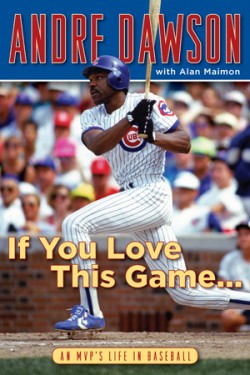
If you Love This Game…An MVP’s Life in Baseball, Andre Dawson with Alan Maimon; Foreword by Greg Maddux.

From the catalogue:

Reflecting on his accomplishments, his colleagues, and the future of baseball, Andre Dawson tells the story of his four-decade career as a player and executive in this intimate memoir. Seriously injured at a young age, Dawson struggled with chronic pain throughout his career and was only seriously scouted by the Montreal Expos during college. Overcoming these odds, he went on to be named the National League Rookie of the Year in 1977, earn eight All-Star appearances, seven Gold Gloves, and a Most Valuable Player Award. This behind-the-scenes look at a dedicated player’s journey from a segregated Miami neighborhood to the fabled halls of Cooperstown offers fans a window into the psyche of a fan favorite.

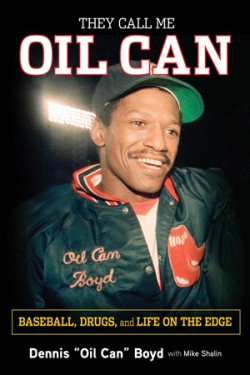
They Call Me Oil Can: Baseball, Drugs and Life on the Edge, Dennis “Oil Can” Boyd and Mike Shalin.

From the catalogue:

Speaking candidly to veteran sportswriter Mike Shalin for the first time about his often tumultuous career in Major League Baseball, Dennis “Oil Can” Boyd recounts a life that began in the Deep South of Mississippi, and the events that led him toward great heights atop the pitcher’s mound at Fenway Park. As part of a stellar rotation alongside Bruce Hurst and a young Roger Clemens, Boyd served a dazzling array of pitches to opposing batters, most notably during the Boston Red Sox ill-fated 1986 World Series run against the New York Mets; and while he was at once brilliant and focused on the mound, off the field—as he affectingly reveals here—Boyd was unraveled by the personal battles he waged with substance abuse and destructive mood swings. As one of the few African American starting pitchers in the history of baseball, Boyd offers a candid, insightful, and often funny portrait of an athlete with boundless passion for the game, his teammates, and the Boston Red Sox.

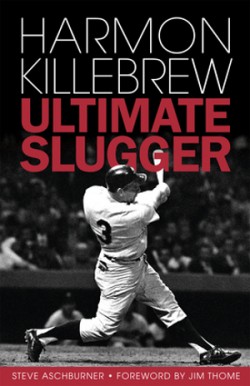
Harmon Killebrew: Ultimate Slugger, Steve Aschburner; Foreword by Jim Thome.

From the catalogue:

When Hall of Famer Harmon “Killer” Killebrew died in May 2011, the baseball world lost one of its best hitters and one of the finest ambassadors the game has ever known. Killebrew was second only to Babe Ruth in home runs by an American League slugger, and finished his career with 573 home runs and in 11th place for all-time Major League Baseball history. This book takes a look at the 22-year career of a perennial Most Valuable Player candidate and baseball powerhouse, reviewing his life in and out of baseball and peeling back the mystery surrounding this intensely private athlete. This biography is a look not only at Killebrew’s long career as a player, but his life as an announcer and businessman after his retirement from baseball.

Sherman Interview 2: Feinstein a different voice for Mad Dog Radio

John Feinstein never will consider himself to be a radio guy. As he established in part 1 of our interview, he is a writer first and foremost.

However, since radio now occupies four hours of his day, Feinstein wants to be good at it. In his mind, it means doing some things that break from the tradition of sports talk radio.

In part 2 of our Q/A, he discusses his relatively new show with co-host Bruce Murray, Beyond the Brink (Mad Dog Radio, 10 a.m.-2 p.m. ET). He talks about differences in approach with Murray, boring guests, and Tony Kornheiser, whose radio show serves as a blueprint for Feinstein.

What has it been like doing a daily radio show?

I haven’t found it that hard. I can talk for four hours with taking a breath.

It took a while for Bruce and I to adjust. He had been doing it alone. We have different ideas for what makes good sports talk radio. Bruce is more traditional. He focuses on games, NFL, NBA, baseball. We had an argument on a Monday about what was the big story: Tiger Woods winning the Memorial or Celtics-Heat. I thought it was Tiger. He thought it was Celtics-Heat.

Tiger Woods, for better or worse, is the best-known athlete in the world. I tend to talk about people, tell stories about people. Bruce likes to break down the games. It’s OK to get two different guys. Over the course of four hours, you don’t want to sound the same.

Is it possible to do a successful sports talk show without a lot of bluster?

Tony Kornheiser has shown you can be successful by doing a smart show. A lot of what I do comes from him. His philosophy is that you don’t have people on just because they are big names. A couple of times, they came to me and said, ‘We can get so and so.’ I said, ‘He’s terrible.’ Tony has a no athletes rule. I don’t think I can get away with that, but I’d rather have on a smart TV commentator or journalist or a coach willing to talk.

They booked (Baltimore GM) Dan Duquette. The Orioles have had a lot of success. Dan came on for 15 minutes and it was physically painful. Then I booked (Baltimore baseball writer) Peter Schmuck. He was great. Peter’s going to be honest, while GMs are paid to hide stuff.

Whether or not we can succeed this way, I don’t know. I’m going to try to do it.

What is your view on callers?

If you get a smart caller, that’s fine. Let him make a few points. But if you get someone who is screaming, get him off. Bruce said, ‘Oh no, you can’t do that.’ I said, ‘Not only can you do that, but you should.’

We had a cadre of callers who were pissed when I first got here. Part of it was people reacting negatively to change and part of it was people who felt it was their show. One day, we had a guy who was screaming because he was put on hold. I said, ‘Fine, don’t call.’

Some of those callers have gone away, and we’ve replaced them with some quality callers. We have 6-8 regular callers where I’m kind of interested in what they have to say.

What do you bring to the show?

I think I’m able to add some things because of my background. Because of what and who I’ve covered through the years. Sometimes I tell stories about people I know. Like when Casey Martin qualified for the U.S. Open. I talked about being in the Supreme Court when they heard his case, and then talking about it to Casey later. I talked about some of the arguments I witnessed in the locker room. I told the story of Fred Couples arguing with Payne Stewart. Fred thought he should get a cart because he had a bad back. Your typical sports talk host doesn’t know this.

What kind of feedback have you gotten thus far?

It’s been positive. But you know in TV and radio, you’re great until the day they fire you.


Costas interview with Leyland: Bonds, Tigers, retirement and being a singer

On MLB Network Saturday:

Detroit Tigers manager Jim Leyland looks back on his 26-year career as a Major League Baseball manager in a new episode of MLB Network’s Studio 42 with Bob Costas this Saturday, June 9 at 2:00 p.m. ET.

Studio 42 with Bob Costas featuring Jim Leyland will re-air on Sunday, June 10 at 10:00 p.m. ET

And here are some excerpts:

On managing the Pittsburgh Pirates in their 1992 NLCS loss to the Atlanta Braves:

The ’92 loss was probably the toughest I’ve ever suffered and it was a very interesting scenario.  I said it at the time and I still think about it today, this whole picture flashed in my mind [of] a Little League World Series.  It was almost reduced to that, like a Little League game, where one side’s jumping up and down and one side’s crying.  It was unbelievable.

With all due respect to the media people [and] TV people, I asked them, “Can we have a couple of extra minutes?”  I said, “This is a tough one,” and they gave us that.  I always appreciated that…It was pretty much what you’d expect, some guys crying, some guys just really lost…I was in a total fog.  You know the old saying from Jack Buck, “I can’t believe what I just saw,” that’s kind of the way I felt.

On managing Barry Bonds while in Pittsburgh:

I saw a lot of good things in Barry…He’s not as tough as he lets on. I think he’s one of those guys that it was a motivational tool for him to upset people, to make them mad at him.

He was coachable and he was manageable.  A lot of people didn’t think so, but it depended on how you coached him.  Barry was one of those guys where he was very coachable, but you had to let him think it was his idea.

On managing the last inning of the 1997 World Series between the Florida Marlins and Cleveland Indians:

I thought “Devon [White] is going to hit a sacrifice fly, get a fly ball over somebody’s head, get a base hit, whatever it may be,” We were gonna win the World Series.  When he hit the ground ball to second and they forced the guy at home, I said, “Oh my God, I’m almost out of pitching.  I gotta look at what I’m doing.”…I was looking back down at my card and just before the pitch to Edgar [Renteria], I looked up again…Just as I looked up, Edgar hit it and I looked it and it was in center field.  I’m going, “Oh my God, it’s over, and what a relief.”  I was actually relieved more because I didn’t have to continue to work on my lineup card…It was an amazing feeling.

On Game Seven of the 1997 World Series being underrated:

It’s always stuck in my craw, it’s always bothered me a little bit…I really believe had that been the Yankees [and] the Dodgers, Yankees and the Mets, it might’ve gone down as the second greatest World Series game of all time. … It was truly a better game for me than the Arizona [Diamondbacks] and Yankees [Game Seven in 2001] …It’s one of the greatest games, I think, that was ever played…I think the fact that it was Cleveland and Florida, it just didn’t get the hype that it should’ve gotten.

On if he felt he was done in managing after one season in Colorado in 1999:

I didn’t think I would ever manage again.  I truly did not think that I would ever manage another Major League Baseball team. I left four million dollars on the table.  My wife wasn’t real happy about it.  I just felt like I didn’t want to go back there and try to fake my way through it.  It wasn’t the right thing to do.

On taking the managerial position in Detroit in 2006:

[Detroit] was probably really the only situation [I would go to]. I live in Pittsburgh so Philadelphia would’ve been a nice little ring.  I would’ve been interested.  They had a good team, a nice, new ballpark.  But [Detroit] had more to it than a lot of other things.  I didn’t think, at my age, I was ever going to get a chance to manage the Tigers.  All of a sudden, this kind of fell in my lap. Here it was and I said, “You know what, I’m reenergized.  This is what I thought I always might have a chance to do, get a shot to do. Here it is, a little late.” But, yeah, this worked out good.

On when he will retire:

When the passion’s not there. When I start getting up in the morning and not wanting to go to work, I’ll go home. Tony [La Russa] and I are a little bit different in that I had a six-year sabbatical [from 1999-2006] and that really refreshed me. That got the battery going again.  I think that really helped me out. I think if I would’ve tried to do it like 33 straight years like Tony did, I probably would’ve stepped away too, maybe even before that.  But that six-year sabbatical, I spent some time at home and watched the kids grow up a bit.  It really refreshed me.

On what he would do if he wasn’t in baseball:

I’m embarrassed to say this, but I would’ve liked to have been in a band.  I love to sing.  I played the trumpet as a kid.  Our family sat around the piano. I never played a piano in my life, but my brother played the piano, my two sisters played.  I love it.  I still like to sing.  I’m not as good as I was at one time.  I was ok at one time…I can’t quite hit the high ones like I used to, but I was ok.  I sang weddings and I was in a choir and different things like that, and I loved it.  But this worked out a little better, I think.

I love soft rock.  I’m not into the rap too much, obviously.  I’m a little old for that….I love the oldies.  I saw “Jersey Boys” four times…I love musicals.  I saw a lot of the musicals.  I like those and participated in those in school, so that’s probably what I would’ve tried to do.  I doubt it would have worked out, but who knows?  That’s a tough business.  That’s probably tougher than our business to be successful in.


Dream Team rises again in NBA TV documentary

The U.S. basketball team will have plenty of star power in London, but there will be only one Dream Team.

Twenty years ago in Barcelona, a team for the ages transformed basketball. A new documentary on NBA TV (Wednesday, 9 p.m. ET) chronicles Michael, Magic, Larry, Charles, Patrick, Scottie and the rest with interviews and rare footage.

I’ll have more next week, but here’s a video clip with the release below.

From NBA TV:

NBA TV will celebrate the 20th anniversary of USA Basketball’s iconic team, which captured the attention of fans around the globe, when the network premieres NBA TV’s “The Dream Team” presented by Right Guard on Wednesday, June 13, at 9 p.m. ET.

Narrated by writer/director/producer Ed Burns, the film will be the definitive documentary of the historic 1992 USA Basketball team, featuring recent interviews with all 12 members, including Michael Jordan, Magic Johnson, Larry Bird, and Charles Barkley.

The 90-minute documentary will showcase never-before-seen footage and untold stories of how the most dominant team ever assembled returned USA Basketball to glory, while turning basketball into a global phenomenon.

The world had rarely seen a frenzy as the one the Dream Team created when it arrived in Barcelona, Spain, in July 1992. The Dream Team featured 11 future Naismith Memorial Basketball Hall of Fame players and three future Hall of Famers on the coaching staff, including head coach Chuck Daly.

NBA TV’s “The Dream Team” presented by Right Guard® will take viewers on a behind-the-scenes journey into the selection of the team, the dynamic personalities, the legendary team-building experiences in training camp and exhibitions, and ultimately its rock-star-type unveiling in Barcelona.

NBA TV’s “The Dream Team” presented by Right Guard® will include:
· Exclusive one-on-one interviews with the entire Dream Team: Magic Johnson, Larry Bird, Michael Jordan, Charles Barkley, Clyde Drexler, Patrick Ewing, Christian Laettner, Karl Malone, Chris Mullin, Scottie Pippen, David Robinson, and John Stockton, as well as assistant coaches Lenny Wilkens, Mike Krzyzewski, and P.J. Carlesimo
· The Team’s only loss, as documented through rare footage from USA Basketball’s film library, and the untold story behind what has become part of basketball legend
· The Story of the greatest game never seen, featuring exclusive footage from 20 years ago in Monte Carlo when Magic and Jordan went head-to-head in practice
· How The Team was chosen: the story behind the selection process for the Dream Team’s roster
· Many other exclusive interviews with those connected to the team.

Massive headache for NBC; I’ll Have Another out of Belmont

So much for the Doug O’Neill angle for NBC.

I’ll Have Another just was scratched for the Belmont tomorrow. The horse has a swollen left front tendon.

Meanwhile, somebody also should hand out ice packs to NBC executives, who suddenly have developed massive headaches upon hearing the news. I’ll Have Another’s bid for the Triple Crown would have pulled in huge ratings for the network.

Now, not so much.

NBC just released a statement:

While we are obviously disappointed that our show won’t feature I’ll Have Another going for the elusive Triple Crown, the Belmont Stakes is still an iconic event on the sports schedule, and the NBC Sports Group broadcasts will treat it as such. We’re working now to adjust the game plan accordingly.

Translated: *$&$*^%!!!!!!!

Indeed, imagine the behind-the-scenes scrambling by producer Rob Hyland and his crew. Anticipating the historic ride, NBC expanded its coverage, with the telecast beginning at 4:30 p.m.

Now all those I’ll Have Another features go to the trash can. Suddenly, Hyland and NBC have a lot of time to fill, and the stories become far less compelling.


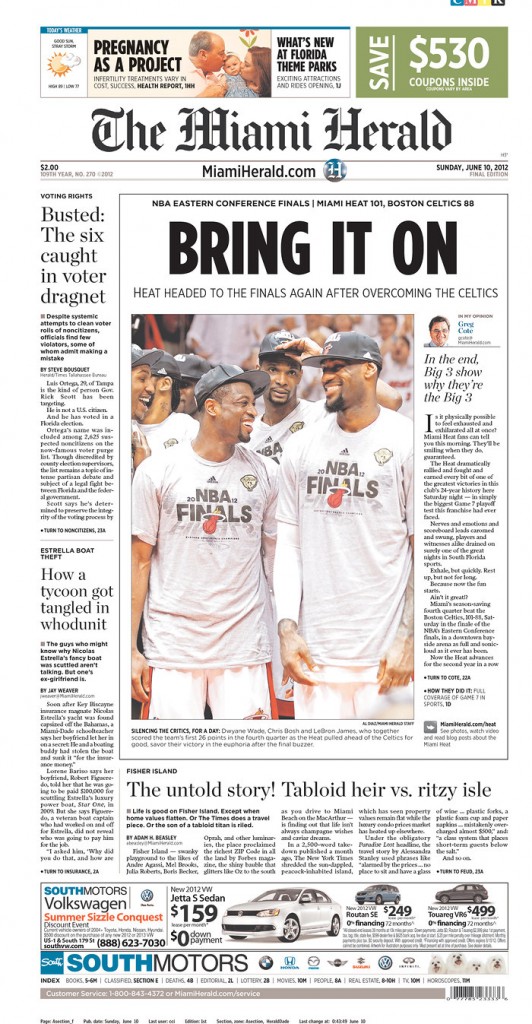
LeBron show generates highest cable rating ever for NBA

Wasn’t that fun to see LeBron James throw it back in the face of all those ESPNers who buried him and the Miami Heat Tuesday? Count on the First Take’s Skip Bayless to be fairly insufferable if the Heat win Saturday. He was about the only person in Bristol who stuck with LeBron.

As expected, Game 6 broke ratings records. From ESPN:

Thursday night’s NBA Eastern Conference Finals Game 6 on ESPN – the Miami Heat defeated the Boston Celtics to even their series at 3-3 – generated an 8.2 overnight rating, the highest overnight for an NBA game ever on cable (records back to 2003), according to Nielsen. The 8.2 for Game 6 surpasses the previous record, a 7.9 for Game 4 of this series, as the best overnight ever.

The 8.2 overnight rating is up 49 percent compared to the most recent Game 6 on ESPN – Boston/Orlando in the 2010 Eastern Conference Finals – which posted a 5.5.

In Miami, Game 6 delivered a 22.0 rating, the highest-rated NBA playoff game on ESPN in the market. In Boston, the game averaged a 20.5, the second highest-rated NBA game on ESPN in the market.

Besides the Celtics, the other big loser was the NHL Thursday. Game 5 of the Stanley Cup Final also is slated for Saturday night.